The short answer
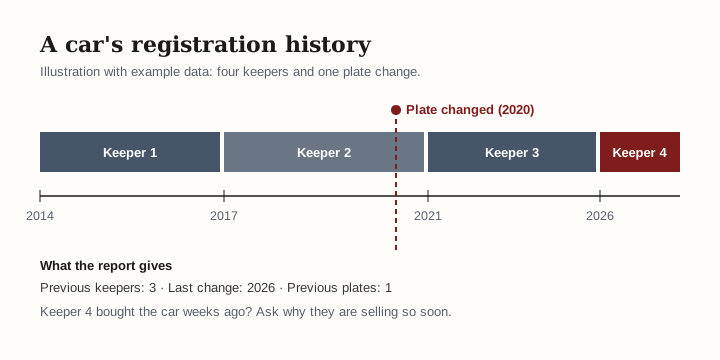
A car's registration history is the record of its keepers and number plates: how many registered keepers it has had, the date of the most recent change, and any earlier registration numbers it carried. It lets you test the seller's account and match old paperwork to the car. It is in the Basic report (£3.99) and the Premium report (£7.99); past keepers' names and addresses are never shown.
What is the difference between a keeper and an owner?
The registered keeper is the person the DVLA holds responsible for the car: the name in the V5C logbook. The owner is whoever has legal title to it, which may be a finance company, a leasing firm or an employer.
So a car ownership history check by registration is really a keeper history: it counts the keepers and dates the changes. It says nothing about who paid for the car, which is what the finance check is for.
What does the number of previous keepers tell you?
On its own, not much: a ten-year-old car with five keepers is nothing unusual. What matters is whether the count fits what you are told. A seller who says they have had the car for years when the last change was a few weeks ago is a reason to ask more questions.
Several changes in a short time can mean a car people do not keep, for a reason the advert leaves out. Set the dates beside the MOT history: a gap in the tests or a jump in the mileage around a change of keeper is worth asking about.
Why do plate changes matter?
Moving a private number plate on or off a car is common and legal. It does mean the car's older paperwork, such as MOT certificates, the service book and old invoices, may carry a different registration from the one on the advert.
The report lists the previous registration numbers recorded for the car, so you can match that paperwork to it, and so a new plate cannot make an old record look like it belongs to another car.
What does the report show about keepers and plates?
- The number of previous registered keepers
- The date of the most recent change of keeper
- The previous registration numbers recorded for the car
These are in both reports. The Basic report (£3.99) adds a mileage verdict and a valuation; the Premium report (£7.99) adds the finance, write-off and stolen checks, scrapped and exported records and the full VIN.
How do you check a vehicle's owner history?
- Enter the registration and your email address in the form above.
- Check the make, model and colour shown against the car you are viewing.
- Pay for the Premium report (£7.99) by card or PayPal. It opens on screen and is emailed to you.
Questions buyers ask
Can I find out who owned a car before me?
Not from us. Past keepers' names and addresses are personal data and are not shown. The report gives the number of previous keepers and the date of the last change.
Is the registration history free?
No. Keeper and plate records come from licensed data providers: they are in the Basic report (£3.99) and the Premium report (£7.99). The car's DVLA details and MOT history are free with the look-up at the foot of each page.
Does a private plate mean something is wrong?
No. Private plates move between cars all the time. It only means the car's older paperwork may show another registration, which the list of previous plates lets you match.
How many previous keepers is too many?
There is no set number. Judge it against the car's age and the seller's account, and look out for short spells of keeping close together.
Is the registered keeper the owner of the car?
Not always. The keeper is responsible for the car; the owner may be a finance or leasing company. The finance check in the Premium report shows whether money is still owed on it.